Explore a curated world of ancient wisdom, scripture, and sacred art—

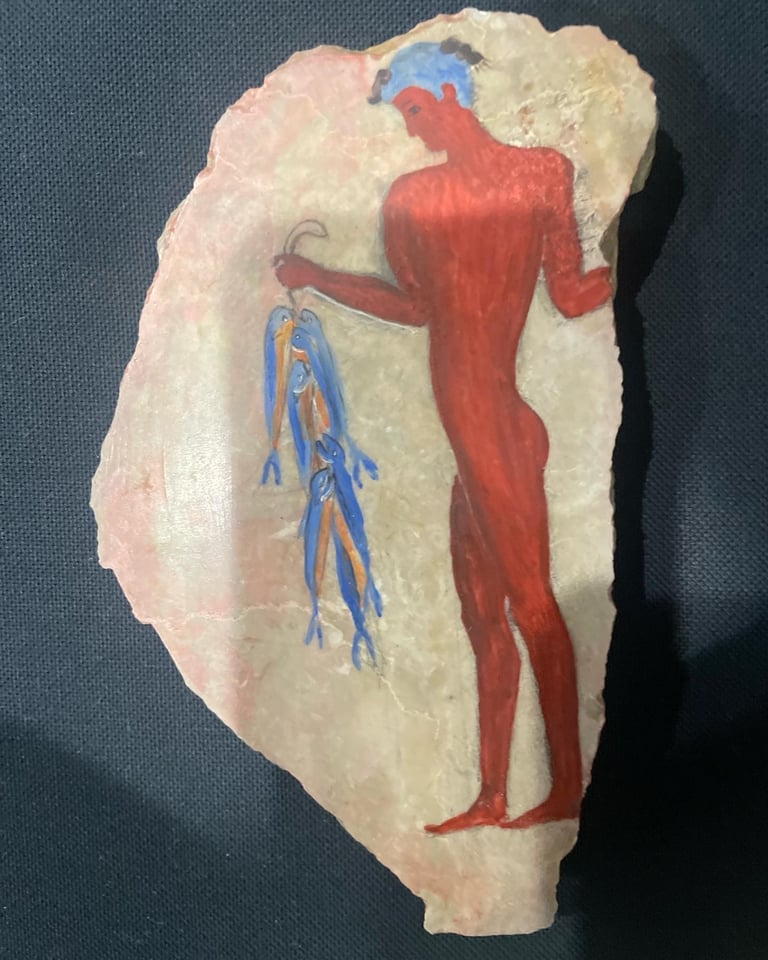
Crete Minoan Knossos Mural Fragment 17 BC
Minoan Knossos Mural Fragment
Circa 1600–1450 BCE
From the Palace of Knossos, Crete
This rare Minoan Knossos mural fragment originates from the ruins of the Palace of Knossos, the ceremonial and political heart of the Minoan civilization. Dating to the Late Bronze Age (circa 1600–1450 BCE), it once formed part of a vibrant fresco that adorned the palace walls, depicting themes central to Minoan life — ritual, nature, and myth.
Painted using the true fresco technique, pigments were applied directly onto wet plaster, allowing the colors to fuse with the wall itself. Despite nearly 3,500 years of weathering, earthquakes, and upheaval, traces of the original vivid blues, reds, and ochres remain.
Historical Context
The Palace of Knossos, excavated by Sir Arthur Evans in the early 20th century, revealed a labyrinthine complex rich with storerooms, ceremonial halls, and elaborate frescoes. Minoan art frequently depicted:
Bull imagery — symbols of strength, fertility, and ties to the Minotaur myth.
Marine motifs — dolphins, shells, and aquatic life reflecting Crete’s maritime power.
Ritual scenes — athletic figures, processions, and sacred dances expressing spiritual identity.


© 2026. All rights reserved.
Preserving the past to enlighten the present.

Preserving the Past. Inspiring the Future.
History is more than what we remember. It is the foundation of who we are and what we become.